It was the fag end of summer. Straw poked out of the parched plastic windowsill box and the little patch of grass below now resembled a dustbowl. Penny pulled the blind down and let her eyes travel once more around the still, stagnant room. Vera had died in that bed less than twenty‑four hours ago. The undertaker had been called in the night by her next of kin, and by dawn her body lay resting in the mortuary.
Most of her belongings in the room remained exactly as before: her staple wardrobe of light‑coloured trousers and soft cotton jumpers in shades of mauve and purple, neatly folded in the chest of drawers - each garment labelled with her name, Vera Figgis. Her matching mother‑of‑pearl hairbrush, hand mirror, and pillbox were still laid out on the dresser, untouched. Penny knew that by tonight they would all be bagged up ready for collection before the next resident moved in.
Where once a painting had hung was a large rectangle of creamy magnolia against the otherwise bleached‑out walls. Penny had often stared at the seascape - a delicate pastel wash of shimmering blues and greens. A photograph, too, was missing. It had showed a younger Vera standing beside a wine‑coloured VW Beetle, her back to a similar stretch of coastline. Beside her stood a Jacques Tati-like figure in a large overcoat and bow tie, pipe in hand. He looked just like Vera’s cousin Tristan - the one who had received the call from the cover duty manager the night before. He had returned to the vacant room earlier this morning, taking the photo and the painting with him.
In the en suite, a William Morris washbag still hung from a peg - the only personal touch among the standard issue equipment of grip rails, non‑slip grey vinyl flooring, shower seat, and commode. There was nothing dignified about getting old, Penny thought for the umpteenth time, and yet Vera had displayed an inner calm - a warmth in her eyes that never dimmed, even as she needed help with the most intimate of tasks.
As Penny flicked off the light, her hand brushed against the radiator. It was still on. Renaud the care manager had asked for it to be switched off before he left for Mauritius, but the maintenance officer was off sick, and the cover duty manager said the heating contractor needed to authorise any changes to the system. So the radiators had stayed on, pumping extra heat all summer long.
Tristan had chosen Walnut Lodge at the end of months of looking. After Vera’s diagnosis and decline, the social worker had left him with a mound of glossy care home brochures. He soon learned the tell‑tale signs - reception areas that resembled hotel lobbies only to be followed by long, silent corridors of locked doors. Moving into the living room, plastic‑covered chairs in semi-circular rows facing an always‑on television. Like an airport departure lounge, he thought grimly, where the flights are permanently grounded.
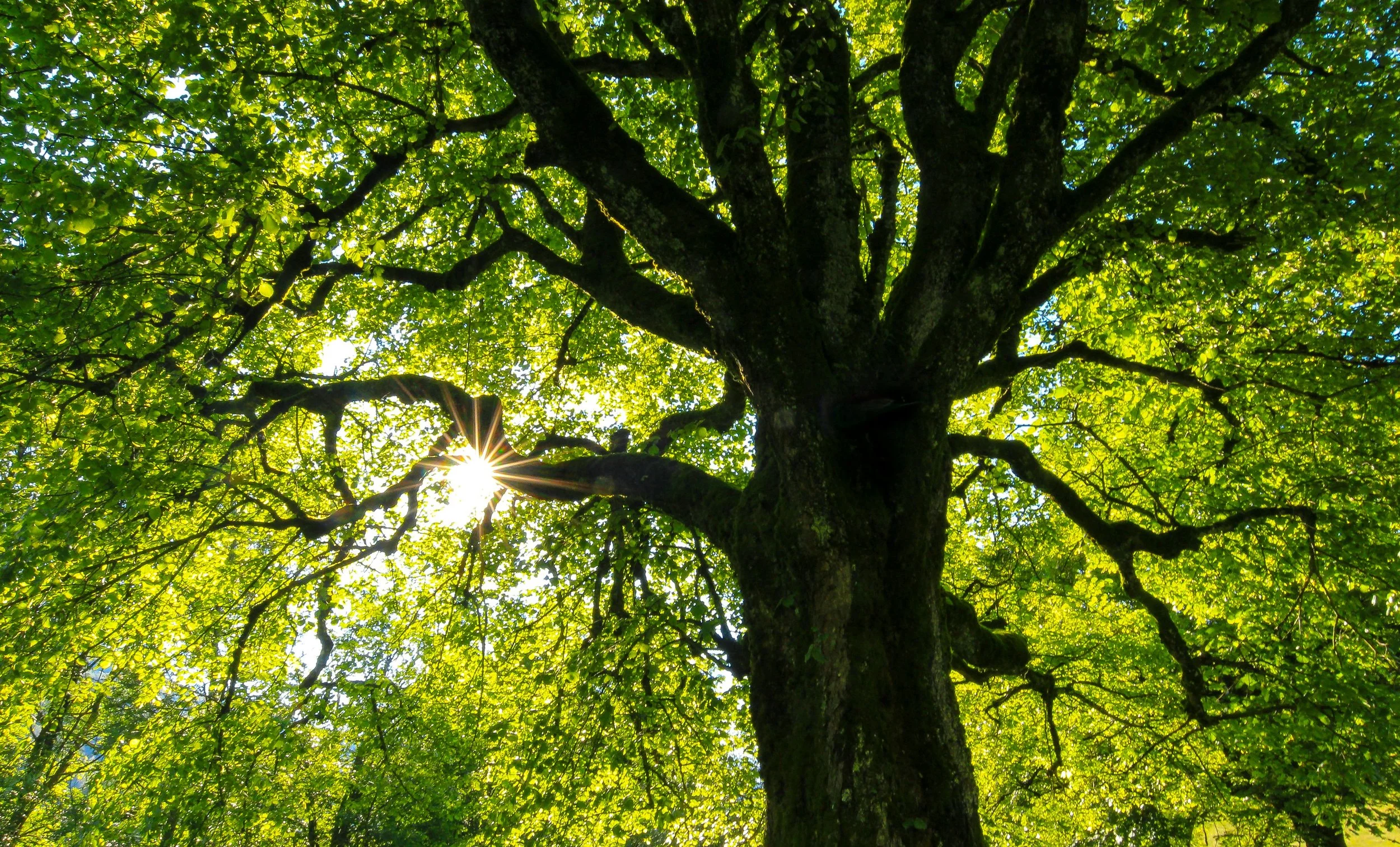
Walnut Lodge didn’t have a brochure or even a website. It was an unusual building - hexagonal in shape and on one floor. There was no fancy entrance, only an unobtrusive sign hidden by an overgreen yew tree. As Tristan pulled up outside, he could see why his colleague at work had said it was a worth a visit. Built in the 1970s, it had been cleverly designed to maximise light and space for those inside, not simply put a show for outsiders. When he walked in there was no obvious reception area to welcome prospective clients. His eyes were drawn immediately to the large green courtyard at the centre of the property, dominated by a single, spreading walnut tree.
Renaud, the care manager, greeted him, peering up from a stack of paperwork in his tiny, airless office. His sleeves were rolled up and a biro tucked behind his ear; he looked worn out but exuded an air of warmth. A holiday snap on his desk showed, Tristan guessed, his wife and possibly a grown up daughter somewhere exotic surrounded by a gaggle of giggling children.
As Renaud spoke, his voice carried the soft inflection of French Creole. Malheureusement, they were full, but for good reason, he said. Many of the residents had lived well with dementia for years, and Walnut Lodge had become their long‑term home in the truest sense of the word. Would Tristan still like to look around?
Once inside its inner sanctum, Tristan could see why the geometrical shape made so much sense. All the little hexagonal bedrooms opened inwards onto a single circular, light‑filled corridor — a soft, carpeted loop that encouraged residents to walk off their restlessness or settle into one of the many nooks, each furnished with a chair angled towards the great walnut tree at the centre.
In the garden itself were raised beds with plastic trowels, where a few residents were gently turning the earth. Volunteers from the local garden centre encouraged them to help with bulb planting, watering and weeding. He knew then and there that Walnut Lodge was the place for Vera.
That had been in the spring of last year. It was late autumn before a place became available. Like all the other rooms, she had her own windowbox, regularly tended by the estates team, who had freshly planted buttery yellow violas for her arrival. Just across the corridor was the lounge, and a little further round a small games room and breakfast room - each space bright, open, and designed to draw residents gently out of their rooms and into the rhythm of the home.
Penny had worked in several care homes in Guildford, but none like this one. Renaud’s laughter was infectious as he gently teased the residents on his morning rounds. There was a strict open‑door policy -not just into the garden, but between residents themselves. What home, he would say, has locked doors? This is not a prison.
Of course it created more work for staff: gently retrieving all the other residents’ slippers Margaret, one of the long-term residents, had lined up under her bed; returning misplaced cardigans back to their rightful owners; smoothing over the small confusions that came with freedom. Visitors could close doors for privacy, and the residents could choose to lock their rooms, but mostly the home was full of comings and goings - a happy cacophony of ordered chaos.
Occasionally, when his grandchildren were visiting from Mauritius with his daughter, Renaud would bring his young family in with him. They are my little rays of soleil, he would beam, as the faces of the more sentient residents lit up with excitement - some throwing their arms open for that tender embrace of youth.
Penny had loved those early conversations with Vera — their heads bowed together over a card table in the games room as bit by bit they pieced together the cracked porcelain Delph vase jigsaw. Sometimes Vera would show her the scrapbook of newspaper cuttings she kept tucked in her bedside drawer, mostly clippings from the births, marriages, deaths section, little notices she had torn out over the years, perhaps tracking one of her lost relatives. Other times it would be a photograph of a clergyman in his dog collar, standing in the doorway of a parish hall, his expression solemn, as if caught between duty and something more personal. And sometimes, Vera would simply take her hand, holding it lightly, as if to say she understood.
Penny had lost her own mother several years ago and had watched her sit out the remainder of her life sentence from a room overlooking the car park of Asda. For health and safety reasons, the windows in all the rooms couldn’t be opened. Penny had asked why and was told the air was thermostatically controlled to avoid any fluctuations in patients’ temperatures. A blue cord hung limply from her mother’s bed, and a sign above it said it should only be rung for emergencies. Penny had tried to explain that to her mother, but Elsie found the nights so long that, in her confusion, she continually pulled it to try to turn the light on. After that, the cord was tied up out of her reach, accessible only to the care team.
All meals were served in her room - again Penny asked why, when there was a perfectly serviceable canteen just along the corridor. The manager explained that this was for Elsie’s safety, as her attempts to converse with other patients had distressed some of the more vulnerable. After that, her mother simply shrank into herself, too scared to ask for help and would shuffle between her bathroom and bed.
Tristan knew exactly where that photo in Vera’s room had been taken. It was Blackrock, just a short drive from Vera’s bungalow in Stillorgan. She had moved there to be near other members of the Figgis’ family. Vera had come from an ecclesiastical family, so when her first cousin once removed — the Bishop — retired to a modest semi-detached in this upmarket Dublin suburb to be near other family members, Vera followed suit. After she had outlived them all, Tristan eventually persuaded her to move across to the mainland, to join him and his wife in Guildford.
He had found a little serviced apartment just a block away from where he and Martha lived. For old times’ sake, he arranged a subscription to the Irish Times so Vera could keep up with clergy and other coming and goings. He and Martha had been newly weds when that photo had been taken. That car, nicknamed Ruby, had been Vera’s pride and joy, despite her not placing much value in material things. It had been Martha, too, who had later painted that seascape from memory back home in Guildford so that it could hang first in her apartment and then here to remind her of home.
When Vera first moved into Walnut Lodge, Martha and Tristan would both visit and take her out for lunch. They had met at Trinity College Dublin, where they had read Classics and then trained as teachers. They hadn’t planned to move to England, but Martha had been offered a research post at Royal Holloway, University of London, and it was simply too good to turn down. Guildford was an easy commuting distance for both, and their life in the Home Counties took shape quickly.
Despite living most of their married life there, they each held onto their slightly peculiar, if endearing, Irish ways. Tristan was nicknamed Sir Robin Day for his predilection for bow ties and tweed jackets, while Martha wore her hair knotted under a silk scarf, redolent of a 1950s housewife. They never had children of their own but their book-lined house was filled with young students’ voices furiously debating politics and the meaning of life at their infamous St Patrick’s Day Guiness stew parties.
Vera had moved into Walnut Lodge just three months after the last Covid restrictions were lifted. The isolation of those pandemic years had arguably brought on her dementia — a cruel price to pay for her personal safety. Now, under the home’s tender care, she was happy and untroubled. It was those small ceremonies — the Friday sherry evenings and the afternoon tea parties — that brought such joy. Tea was poured into delicate china cups, lovingly sourced from local charity shops for earlier VE Day celebrations, and served with scones and butter curled into dainty heaps. Each detail sought to remind residents of days gone by, making the present feel gently imbued with the lives they had once led. By early summer, the human scaffolding that had held Walnut Lodge together was beginning to loosen.
When Tristan received the call from the duty manager, he knew immediately Vera had died. Walnut Lodge had not been the same since Renaud had taken an extended leave of absence to return to Mauritius. It was the first time Renaud had visited his homeland in over twenty years. He had taken the summer off, confident that the routines and plans he had put in place would be faithfully followed.
Immediately after Renaud’s departure, Penny had a feeling of dread. Despite Renaud reassuring her that Walnut Lodge would be in safe hands, she knew from experience how quickly things could deteriorate. Three months was a long time for Renaud to be gone. The intense heat of that summer seemed to rise up from the ground and linger in the rooms well beyond nightfall. If Renaud had been there, he would have left the windows and doors to the garden secured but open to the garden, letting the breeze travel along the circular corridor and slip gently under the doors of the residents’ rooms. Still, she comforted herself despite small lapses here and there, she was confident that the heatwaves that had caused so much distress for the elderly and infirm elsewhere would and could not happen here.
When Renaud’s trusted deputy went on long‑term sick leave, they had no option but to bring in agency staff. Almost immediately, the daily rounds ended and the door to the office remained permanently closed to other staff, visitors and residents. Renaud had always insisted that the GP visit every resident in person on their Monday ward rounds. As a result, the GP knew them all well and could pick up imperceptible changes to their mood or tone - the tiny shifts to their gentle routines that might signal an underlying health condition. This regular monitoring and gentle assessment was, Penny was convinced, the reason so many residents in their care had stayed well for so long.
Within a month, the rhythm of Walnut Lodge had changed. With the agency in place, there was a different manager on duty each week. None of them knew the residents; none of them understood the building and the healing power of outside and the tree; none of them grasped the delicate balance Renaud had maintained between freedom and vigilance. Small things began to slip, not catastrophically, not all at once, but in the quiet, cumulative way Penny recognised from her mother’s final months.
In the week before Renaud and Martha were due to return from Ireland, Vera had a stroke - some sort of catastrophic aneurysm in the brain, apparently, that led to her mercifully swift demise. They never called him. Tristan found out later that the GP had never visited in those final weeks either – the agency would simply call into the surgery instead to check on prescriptions.
That Sunday after he got back, Tristan had walked in as usual to find Vera not in the games room with Penny or busy in the garden. As he walked round the corridor he saw Vera slumped in one of the chairs lined in rows away from the window to face a large newly installed giant TV screen. A plastic bib had been tied around her neck, and one of the agency staff was attempting to give her a drink of squash from a children’s tippy cup. The sickly sweet, sticky juice was dribbling from Vera’s mouth onto her pretty patterned jumper — the one Martha had bought for her in M&S.
Tristan went straight to Vera. The young care worker sitting beside her, hurriedly put her mobile phone away as he approached. “Do you know how long she has been like this?” he pleaded. The woman shrugged, but not without compassion. “I’m new here, to be honest, but I think she was already like this when I arrived. The night staff didn’t say much. They’re short of staff.” She stood up. “Let me see if I can find the duty manager, she might know more.”
Tristan followed her down the corridor, but when he reached the duty manager’s office, the door was locked. He stood there for a moment, the blare of daytime TV echoing from the lounge behind him, Vera still motionless in her chair.
Walking quickly into the breakfast room, his eyes scoured the tables for Penny, Vera’s regular carer. She was in the far corner, leaning gently over the table to coax one of the oldest residents into eating his rice pudding. She had been by Vera’s side from the time she was admitted, until the rotas had been changed by the agency. Now, because of her experience, she was assigned to those with complex needs. Unbeknown to her, Vera had for the past week been served meals in her room.
Tristan sat down quietly, tears welling in his eyes. Did she know what had happened? He had left Vera well just a couple of weeks before. He and Martha had gone to Dublin for a university reunion and extended their stay at Hunter’s Hotel in the Vale of Avoca. In his hand, he still carried the barmbrack that had been a favourite of Vera’s.
A shadow crossed Penny’s face. She had asked to be put back on Vera’s rota more than once, but the new manager had waved her away, saying disdainfully she mustn’t have favourites. Now, sitting beside Tristan, she felt the familiar ache of helplessness settle in her chest - the same ache she had known when she had tried, in vain, to fight her mother’s corner.
In an attempt to keep the home cool, all the curtains had been drawn. Without the tree as their lodestar, the residents became confused and distressed, fumbling their way along the circular guard rail with nothing to orient them but its smooth, unbroken loop.
The cover duty manager finally appeared, jangling a set of keys as though that alone proved competence. She listened to Tristan with a kind of brisk impatience, her eyes drifting over both of their heads to something that caught her attention beyond.
“Well,” she said, smoothing her ill‑fitting and slightly grimy blouse, “we often see a rapid deterioration in dementia patients. This sort of thing is to be expected. After all, she is ninety and this heat has been something else. But”, she added without conviction, “I appreciate seeing her like this might be distressing for you. What I can say is that she is in good hands and we will keep an eye out for any further deterioration.”
A few days on from that long, sweltering final day in August, Tristan held on to the kindness of strangers. Visiting hours had ended early that evening; visitors were no longer allowed during the evening, and he had left Vera who had been returned motionless to her room. Penny had worked long beyond her shift to sit with her that night, and the next, and the next after that. It was she who held Vera’s hand at the last.
Sitting at home, Tristan picked up his father’s old pipe. Even after all these years it still held the faint smell of tobacco, and with it came that familiar image of his father in his tweed jacket, standing next to Vera - her hair windswept from driving along the coastal road. At a distance stood the ‘Bishop’, his father’s first cousin staring out to sea. Martha had been with him as he took the photo. Tristan could imagine Vera and and his father lifting the VW bonnet, the picnic hamper inside: plates and cups secured by leather ties, a flask of tea, barmbrack thickly sliced with Irish butter. Vera had returned to gentler, softer times.